

The U.S. dollar is under pressure this morning but holding familiar ranges versus the Euro and Sterling.
Overview
The Aussie and Kiwi dollars have rallied a percent, and the Japanese yen is the big winner overnight. Overall, the Bloomberg Dollar Spot Index is down 0.5%. There was some second-tier data released this morning, but it has not affected markets yet. November Housing starts fell but beat dour estimates. Building permits fell more than expected in November as well. A separate survey showed that general regional business activity in the Philadelphia Fed region fell in December. The non-manufacturing index fell to -17.1. Markets are already starting to see the effect of lower liquidity in the markets ahead of the holiday weekend.
What to Watch Today…
- No major economic events are scheduled for today
- Holiday Hours: Dec 23, Dec 30: 8:30a to 3p EST; Dec 26, Jan 2: CLOSED
- Monex USA Online is always open
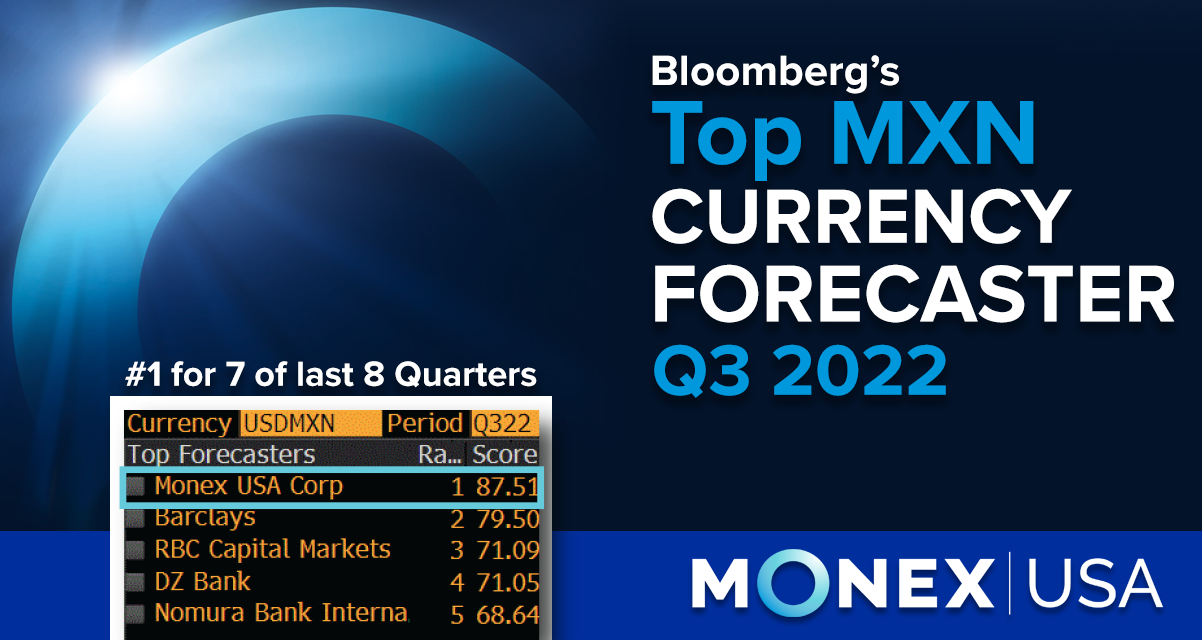
7 wins in the last 8 quarters! | #1 MXN Forecaster for Q3 2022
Bloomberg ranks Monex USA (formerly Tempus) as the top MXN Forecaster again! Learn More
JPY ⇑
The Japanese yen rallied more than three percent against the U.S. dollar after the Bank of Japan Governor Haruhiko Kuroda shocked markets. The BoJ doubled the cap on 10-year yields which can help pave the path for higher interest rates in the future. Bloomberg News explains the move this way: The central bank said the move would enhance the sustainability of its monetary easing, but many economists interpreted the move as laying the preliminary groundwork for exiting a decade of extraordinary stimulus policy.None of the 47 economists surveyed expected the move. Now markets are starting to price in interest rate hikes from the Bank of Japan next year. USD/JPY is now at the lowest level since August.
AUD ⇓
The Australian and New Zealand dollars have both sold off a percent against the U.S. dollar, dragged lower by lower Oceanic and Asian equities. The surprise decision by the Bank of Japan has caused the nation’s 10-year sovereign bonds to drop, hitting riskier assets. A report showed that New Zealand’s business confidence fell to a record low in December, adding another reason to sell the currency.