

The U.S. Dollar is trading in tight ranges following some data suggesting a slowdown in the labor sector and ongoing inflationary growth in Europe.
Overview
The global situation has shown signs of struggles recently, and August figures indicate the slowdown central banks predicted is coming into realization. Mortgage Applications are in deeper negative territory than expected, ADP Employment showed a sluggish uptick of 132K vs. 300K estimated, and Federal Fed officials agree this is needed. Meanwhile, statements from various voting members commit to the current path of hiking interest rates.Oil prices, meanwhile, have dropped for the third month in a row, the longest losing streak in two years for the fossil fuel. Tough outlooks and difficulties looking into the future make for a sentiment of slower growth to come. As long as the war continues, inflation will plague the Euro-zone, which reached a record for Consumer Price Index growth year-on-year, standing at 9.1%.
August saw another half percent increment. Markets will be eagerly anticipating the release of Non-Farm Payrolls on Friday, a determining indicator for the Fed.
What to Watch Today…
- No major economic events are scheduled for today
Back to Back TOP Wins | #1 G10 Forecaster for Q1 2022
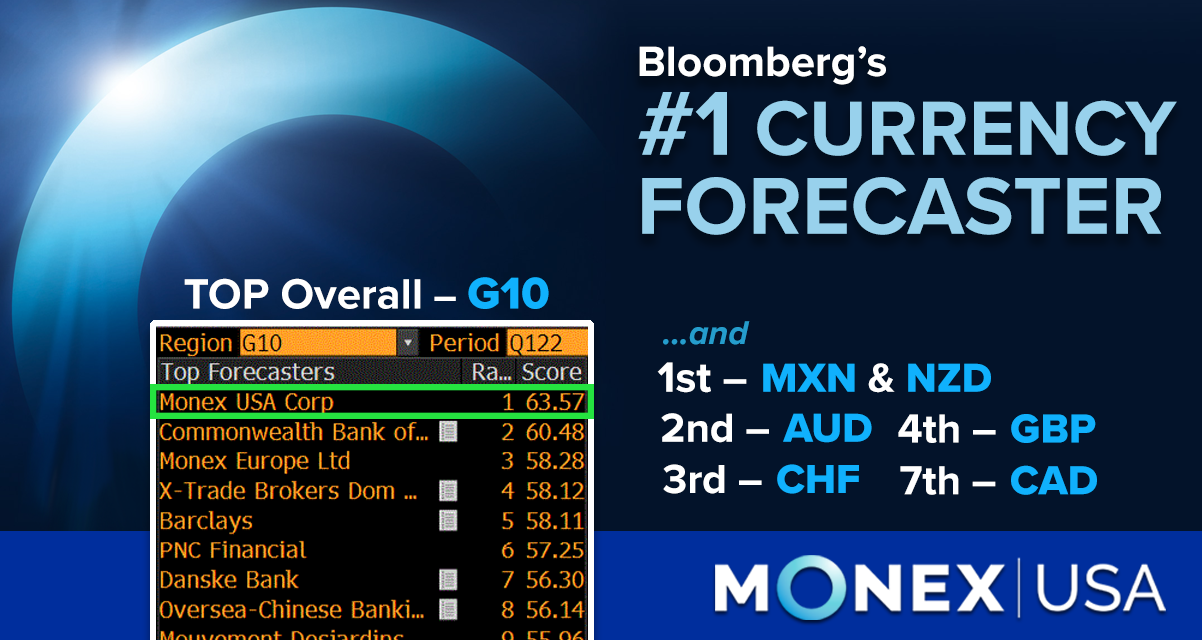
Bloomberg ranks Monex USA (formerly Tempus) as the top G10 Forecaster, NZD, CHF, AUD, MXN, and GBP! Learn More
EUR ⇑
The Euro has not moved, but CPI figures for the Euro-zone seem ripe for the European Central Bank to combat. Although an increase was expected, August showed that prices are not giving anyone a break and the ECB’s meeting for September 8th now looks perfect to start a more aggressive policy. The ECB is now under the spotlight, and the lack of ability to predict energy flows in the European landmass will keep Euro highly volatile.
GBP ⇓
The Pound has fallen to its weakest level since March 20th, 2020. The major decline comes at a time of both economic and political uncertainty as a new PM is set to start an administration facing many post-pandemic challenges. Additionally, plans for spending are running into trouble with Andrew Bailey and the Bank of England forecasting recessionary pressures that are starting to reveal themselves.