

The U.S. Dollar is trading in weaker ranges this morning following a Monday exuding some confidence among traders and investors that the economy will be able to withstand challenges.
Overview
Indeed, this week has begun with a changed outlook from the previous one in which the buck reached multi-decade, if not record, highs against peers across the board based on growing recessionary concerns. Additionally, it seems like the tables are turning on interest-rate hikes boosting the dollar any further as other central banks get ready to follow suit, thus pricing out some of the Fed’s hawkishness lately.As currencies look to recover ground, there is no major data nor risk event until Thursday that we can foresee knocking them down. Central bank action will characterize that day, as will the conclusion of speculation over the Nord Stream pipeline when Russia is expected to reopen flow after maintenance. EU leadership and most of the world predict a shutdown, so anything that seems like a friendlier gesture towards a return to energy-resource activity will be seen as a surprise that could enhance Euro strengthening. For now, it is a dollar-negative moment and recovery mode for all else.
What to Watch Today…
- No major economic events are scheduled for today
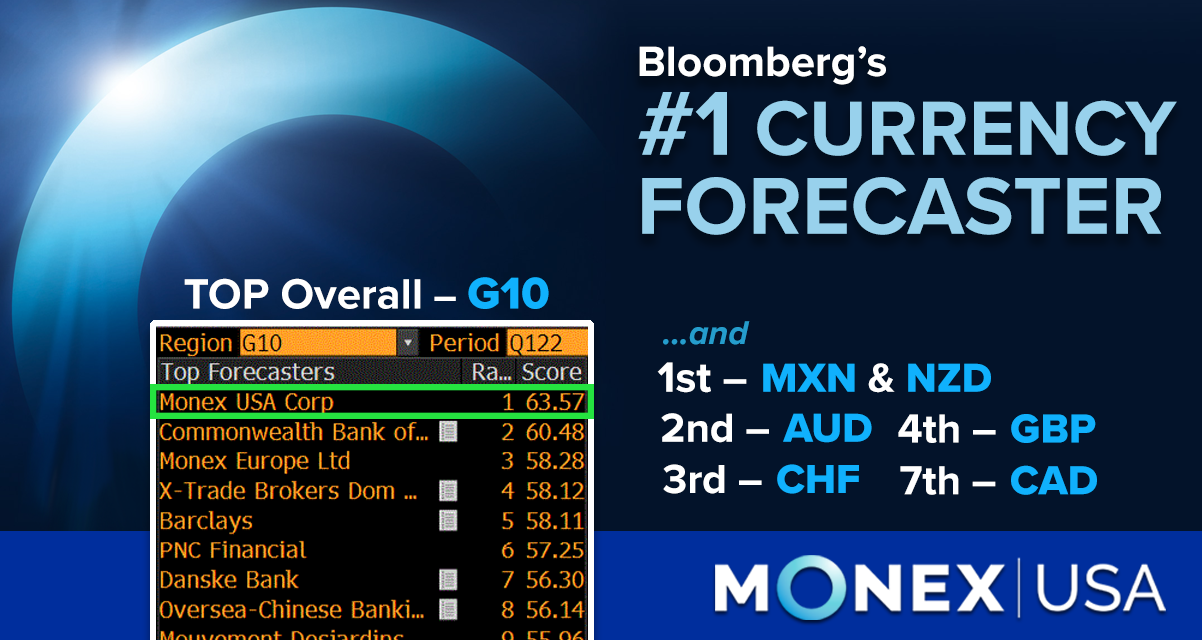
Back to Back TOP Wins | #1 G10 Forecaster for Q1 2022
Bloomberg ranks Monex USA (formerly Tempus) as the top G10 Forecaster, NZD, CHF, AUD, MXN, and GBP! Learn More
EUR
The Euro is up to its best level in two weeks, boosted by the increased chances that the European Central Bank will be hiking its benchmark interest rate by 50 basis points, not just 25 bps as it has been priced in. Earlier, Euro-zone aggregate Consumer Price Index figures for June came in exactly as expected, with the important Year-over-Year figure at 8.6%, giving the ECB evidence that inflation indeed remains elevated.
The ECB’s likely move will mark the first increment to rates since 11 years ago. We shall see how hawkish ECB President Christine Lagarde sells their new guidance on Thursday.
AUD
The Australian Dollar has been going up, and it is back to its best level since the end of June. Along with New Zealand, the Antipodean nations are experiencing high inflation and a very determined consensus from their central banks to hike interest rates as needed. The latest minutes from the Reserve Bank of Australia concluded that economic conditions are quite resilient despite supply-chain woes as China’s shutdowns have hurt trade.
Consequently, the RBA sees it fit to be more aggressive in countering inflation rapidly and may increase its pace of tightening much like the Bank of Canada after its surprise 100-points move.