

The U.S. Dollar erased temporary losses this morning as global markets continue to show great worry about the financial turmoil in the United Kingdom.
Overview
Even after an explanation from the Prime Minister herself, the criticism over the country’s new fiscal plans has deteriorated faith in the U.K.’s ability to keep markets steady in any way. The gloom and doom have been brewing slowly for years after the Brexit referendum in 2016, and now investors feel it adds to a pile of more challenges that go beyond the pandemic.Equity markets have taken a beating, with the S&P 500 index dropping to its lowest point in two years, while the Nasdaq 100 declined 4.0% on Thursday. The S&P 500 has lost for three quarters in a row, the first time that has happened since 2008-2009. It is the first time this has happened to the Nasdaq 100 in 20 years. Recessionary fears have not been quelled by any data, even as Personal Spending increased by more than expected in August.
What to Watch Today…
- No major economic events are scheduled for today
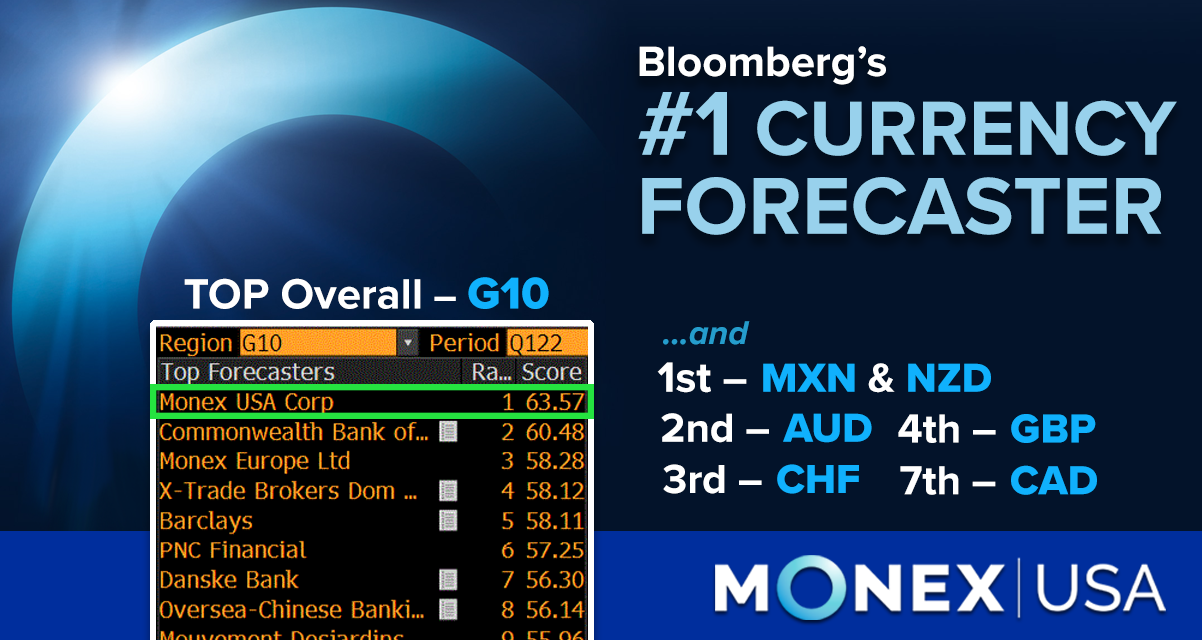
Back to Back TOP Wins | #1 G10 Forecaster for Q1 2022
Bloomberg ranks Monex USA (formerly Tempus) as the top G10 Forecaster, NZD, CHF, AUD, MXN, and GBP! Learn More
EUR ⇓
The Euro returned to losing ground as markets felt pain and more to come ahead. The energy crisis, as well as the need for further security over resources, has markets on edge, wondering if the recession will be a deep one and more difficult to overcome than previously thought. At the same time, there have been signs of the EU stepping up gears towards solutions that lead to further integration as nations also look to cushion households and companies however they can. Prices have not cooled down dramatically, but at least Consumer Price Index figures from Spain and France showed some cooling off from prior data.
GBP ⇑
The Pound rose yesterday, but it is returning those gains today with further negative reaction to the prospects for U.K. economic stability under the current plan for expenditures and taxes. Prime Minister Liz Truss failed to convince markets that her plans would lead to financial well-being and is now perceived globally as going against economic orthodoxy, something that characterized her history in domestic campaigning for public office.
As mentioned yesterday, the current lack of popularity could lead to challenges from the Labour Party. The most recent poll had the Labour Party favored by 33 percentage points over the Tories, the biggest lead for any party over each other in decades. Any high chance for elections will indeed add to Sterling’s volatility.