

The U.S. dollar rode the wave of risk-off trading yesterday and rallied to a 20-year best versus the Euro.
Overview
Overall, the U.S. dollar is at a five-week high even as equity futures show stocks will recover slightly after their biggest fall in two months yesterday. Market participants have also begun to price in more action from the Federal Reserve over the past few trading sessions. Fed Chairman Jerome Powell will speak in Jackson Hole on Friday and most expect him to hold a hawkish tone towards future policy to fight inflation. Later this morning, S&P will release their Purchasing Managers’ Index, which will be the top market mover this morning. Later, the Richmond Fed Manufacturing Index and New Home sales will cross the wire.
What to Watch Today…
- S&P Global PMI at 9:45 a.m.
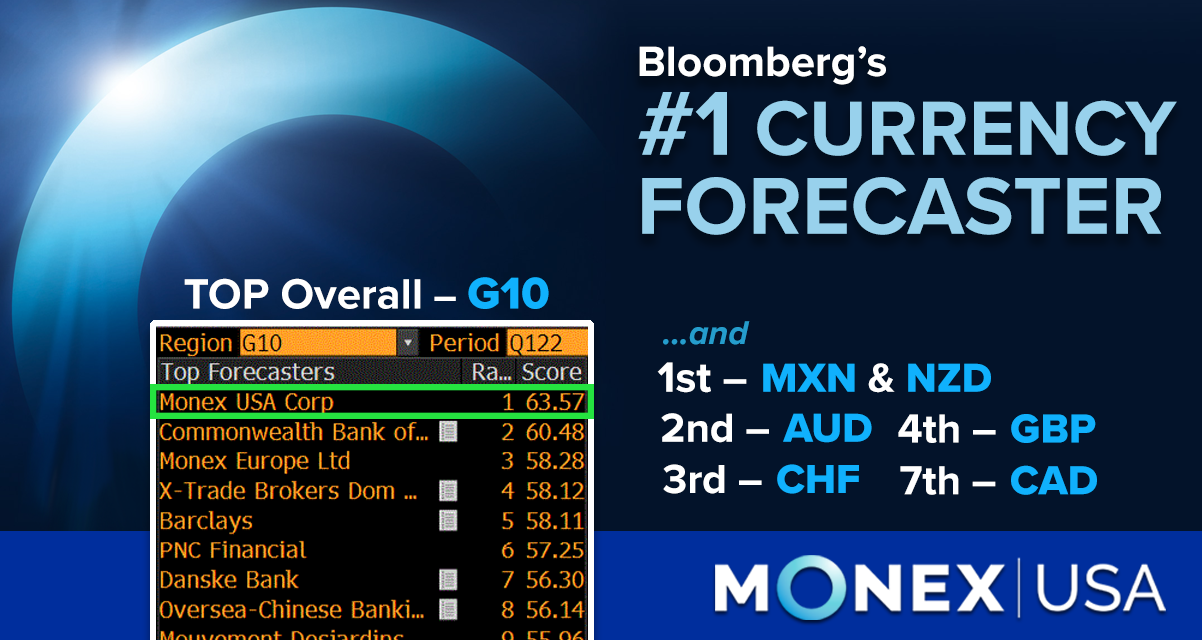
Back to Back TOP Wins | #1 G10 Forecaster for Q1 2022
Bloomberg ranks Monex USA (formerly Tempus) as the top G10 Forecaster, NZD, CHF, AUD, MXN, and GBP! Learn More
EUR
The Euro plunged nearly a full percent yesterday and fell to a 20-year low against its American rival. The Euro has been unable to recover overnight, kept down by poor economic data released in the Eurozone. Eurozone economic activity declined for a second month in August. The Composite PMI declined to 49.2, with 50 representing the line between growth and decline. A breakdown of the data showed most of the drop was driven by a decline in manufacturing. However, the previous rebound in service activity after Covid lockdowns also came to a halt. The European Central Bank continues to find itself between a rock and a hard place. Data shows that Europe may already be in a recession, but the central bank likely sees the scope to continue tightening monetary policy to tamp down inflation amid higher prices for goods and energy. As this was written, European Central Bank Executive Board member Fabio Panetta said the probability of a recession is increasing.
CAD
The Canadian dollar was able to slightly buck the trend of overall greenback strength and gain a touch overnight. The loonie has fallen in the previous four sessions, so the bounce may be short-lived. The overnight move is likely attributed to a nearly 2.0% spike in the price of oil after Saudi Arabia indicated that cartel OPEC+ might be forced to cut production.